
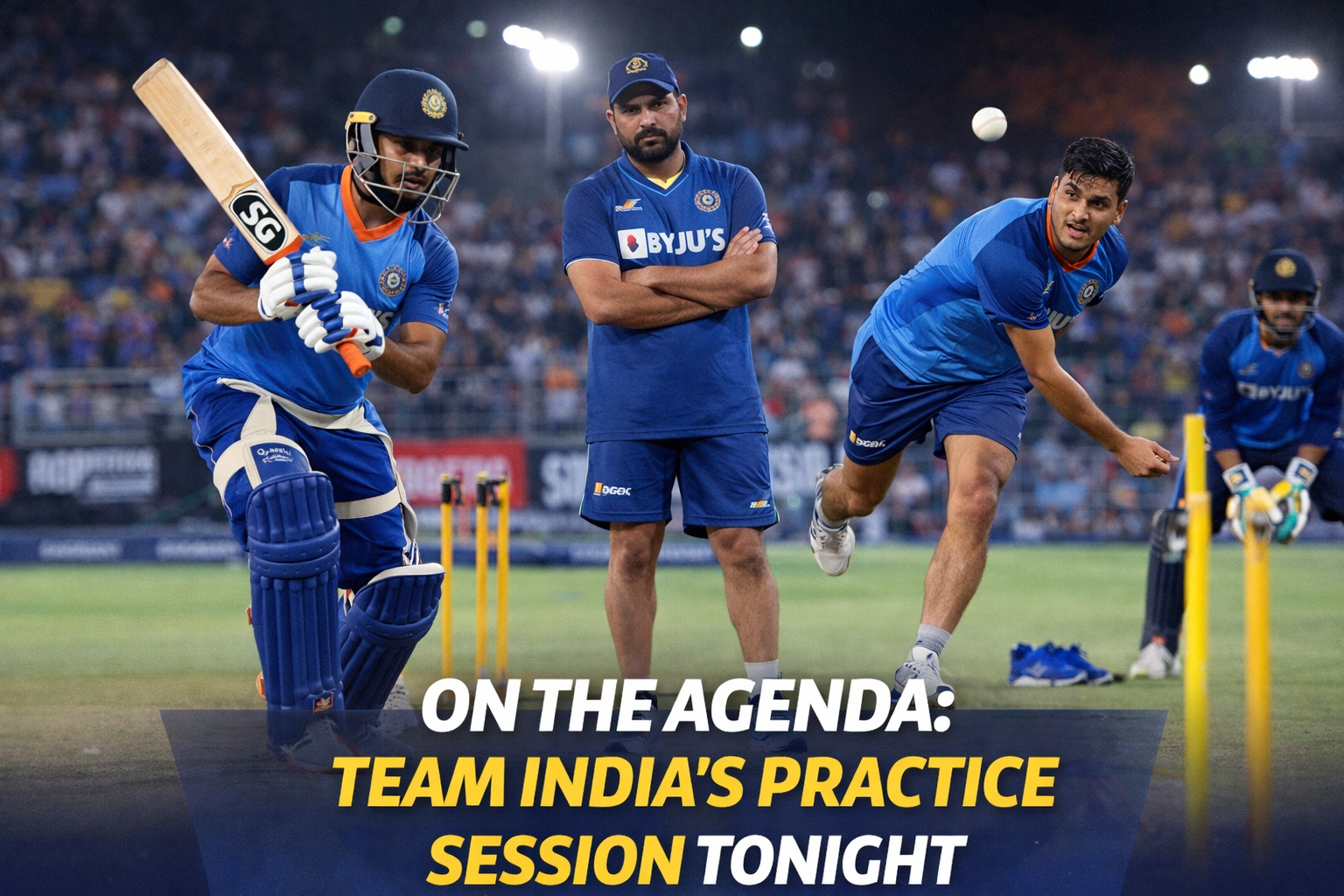
In modern international cricket, a practice session is no longer a routine box-ticking exercise. For the India national cricket team, every training session is a carefully planned step toward peak performance. With tight schedules, intense competition, and constant scrutiny, this evening’s practice session holds significant importance in shaping match-day readiness.
Rather than focusing on volume, Team India’s training should be built around clarity, adaptability, and match relevance. The evening slot, in particular, closely mirrors actual playing conditions, making it the ideal time to fine-tune skills, strategies, and mindset.
Preparing the Body for Match Conditions
The foundation of any effective practice session lies in physical readiness. As the evening brings cooler temperatures and changing light conditions, the warm-up must be purposeful and dynamic. Players need to activate muscles gradually, loosen joints, and mentally switch into match mode.
A focus on mobility, flexibility, and balance helps reduce injury risk and improves movement efficiency. Light catching and reflex drills early in the session allow players to adjust their vision under lights, an often-overlooked factor that can influence on-field performance.
Sharpening the Top Order’s Approach
The top order sets the tone for the innings, and their preparation should reflect match-specific challenges. Facing the new ball requires discipline, patience, and controlled aggression. In the nets, batters should work on judging movement, playing late, and choosing scoring options wisely.
Rather than simply hitting boundaries, the emphasis should be on building rhythm, rotating strike, and punishing loose deliveries. This approach not only builds confidence but also mirrors real-game scenarios where early stability often decides the course of the match.
Building Control in the Middle Overs
The middle phase of an innings is where matches are often managed rather than dominated. Team India’s middle-order batters must focus on maintaining momentum without taking unnecessary risks. This evening’s practice should revolve around strike rotation, placement, and adaptability against spin and defensive fields.
Batters can benefit from simulated match situations where boundaries are restricted and patience is tested. Working on soft hands, quick decision-making, and creative shot selection ensures the scoreboard keeps ticking even when bowlers apply pressure.
Fine-Tuning the Finishing Role
Late-innings batting demands clarity of thought and precise execution. This part of the practice session should focus on handling pressure, understanding field placements, and selecting the right scoring options.
Practicing controlled power-hitting, improvisational shots, and placement-based scoring helps batters stay composed in high-pressure moments. Equally important is learning when not to attack, as smart finishes often come from calculated risks rather than raw aggression.
Bowling with Purpose and Precision
For bowlers, this evening’s session should be about execution and planning. Practicing with specific objectives, rather than bowling long spells, improves match effectiveness. New-ball bowlers should focus on consistency, movement, and setting up batters, while middle-over bowlers work on variations and control.
Death-over specialists must rehearse their yorkers, slower deliveries, and wide-line strategies under realistic conditions. Clear communication with the wicketkeeper and captain during practice also helps align bowling plans for match day.
Emphasising Fielding Under Lights
Fielding is often the difference between winning and losing close games. Evening practice offers the perfect opportunity to work on catching under lights, ground fielding on damp surfaces, and throwing accuracy.
Wet-ball drills and boundary-fielding practice help players prepare for dew-related challenges. High-intensity fielding sessions also reinforce alertness and energy levels, ensuring players remain sharp throughout the match.
Strengthening Wicketkeeping Coordination
Wicketkeepers play a crucial role in controlling the tempo of the game. Their practice should include glovework against both pace and spin, especially under evening conditions where visibility can change.
Clear communication with bowlers and close-in fielders must be rehearsed. This strengthens on-field coordination and ensures smoother execution during pressure moments.
Tactical Clarity Through Team Discussions
Practice sessions are incomplete without strategic alignment. A short team discussion during the session allows players to understand opposition tendencies, pitch behavior, and individual roles.
Such conversations foster unity and ensure that every player is mentally aligned with the team’s game plan. When players know exactly what is expected of them, confidence naturally follows.
Mental Readiness and Focus
Cricket is as much a mental contest as a physical one. This evening’s practice should include moments of reflection and focus-building. Visualization techniques, calm breathing routines, and short mindset exercises help players stay composed during crucial phases of the match.
Mental clarity allows players to adapt quickly when plans change, a vital skill in high-pressure international cricket.
Ending with Recovery and Balance
A well-structured practice session must conclude with recovery. Light stretching, hydration, and physio support help players cool down and maintain freshness. With packed schedules, managing workload is essential to avoid burnout and injuries.
Ending the session on a calm, organized note ensures players leave the ground feeling prepared rather than fatigued.
Why This Evening Practice Matters
Evening sessions closely replicate match-day environments, from lighting to rhythm and atmosphere. Making the most of this time allows Team India to bridge the gap between preparation and performance.
Rather than focusing on quantity, the goal should be quality preparation that sharpens skills, strengthens confidence, and reinforces team unity.
Final Thoughts
Team India’s practice session this evening should be purposeful, balanced, and match-focused. From technical refinement and tactical clarity to mental strength and recovery, every aspect must serve a clear objective.
At the highest level, success is built long before the first ball is bowled. If Team India approach this session with intent and precision, they will walk into the match not just prepared, but confident and ready to perform at their best.
If you want, I can also provide a meta description, SEO-optimized image alt text, or a format-specific version tailored for T20Is, ODIs, or Tests.




Leave a Reply